
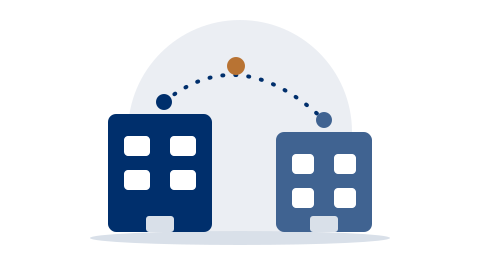
A remake costs time in the clinic, in the laboratory, and for the patient. Its cause is often not a technical error but a missing or unclear piece of information: a shade that was not recorded, a design wish that was not written down, a scan that did not show what the technician needed to see.
Where information gets lost
Information is most at risk at the handovers — from the treatment room to the person who sends the case, from the clinic to the laboratory, and from the laboratory back to the clinic. Each handover is a chance for something to be assumed instead of stated.
What the laboratory needs to know
The exact content depends on the case, but a complete case description usually answers the same questions:
- Which restoration or appliance is needed, and for which teeth or area.
- The chosen material, and the shade with the method used to determine it.
- Scans or impressions, bite registration, and photos where they help.
- Specific wishes for design, contacts, margins, or occlusion.
- The date the case is needed and the planned appointment.
- A contact person in the clinic for questions.
Digital does not fix communication by itself
Digital tools make it easier to send information, and they make it easier to send incomplete information quickly. A scan can be sharp and still miss the area that matters. A digital order form can be filled in and still leave the important wish in a free-text field nobody reads. The value of a digital workflow depends on the agreements around it.
A shared standard between clinic and laboratory prevents more remakes than any single technology.
Building a shared standard
- One case template. Agree on one prescription template for each common case type, with the required fields clearly marked.
- Clear file conventions. Agree on how scans, photos, and documents are named and sent, so that nothing is searched for.
- A checklist before sending. A short check in the clinic catches missing information before the case leaves.
- A fast question channel. The laboratory knows whom to contact, and questions are answered before work continues.
- Feedback on remakes. Every remake is reviewed together to find which information was missing, and the template is improved.
Where to start
Take the last few remakes or returned cases and ask one question for each: which information would have prevented it? The answers usually point directly to the first improvements in the case template and the checklist.
SisuDent’s Digital Solutions service develops CAD/CAM workflows and clinic–lab communication systems that make cases clear from the start.
